Challenging bone
- Irregular in shape and contour
- Poor bone quality, often compared to balsa wood
- A very thin outer cortical shell limits fixation strength


VariTrax™ Sternal CircumFixator™
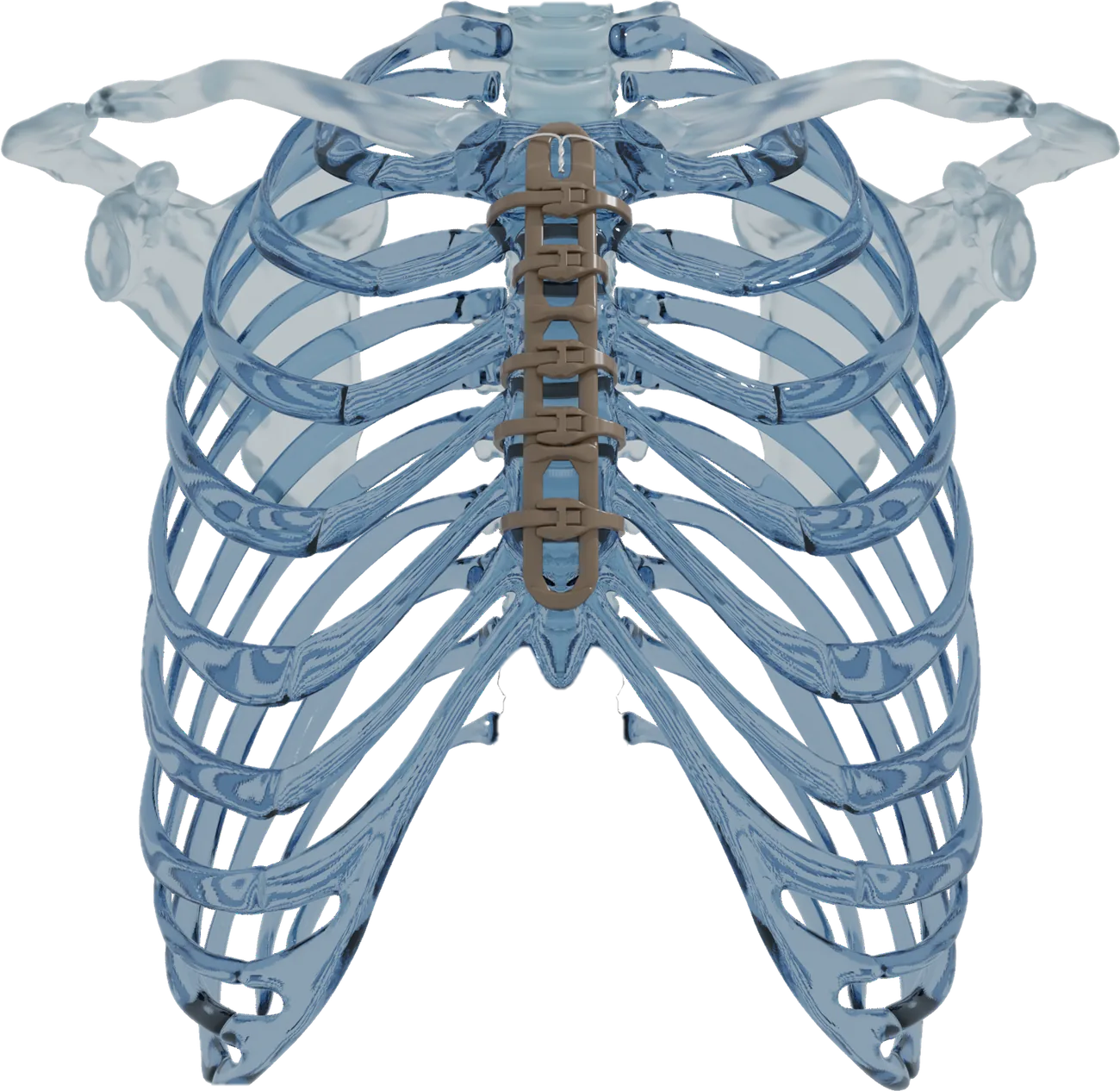
A screwless, all-PEEK system that splints the full length of the sternum and wraps it with tensioned bands, giving rigid fixation that shares load with the bone.
FDA 510(k) cleared · Radiolucent · MRI safe · Single-use sterile kit
The clinical problem
Most sternotomies are still closed with steel wire, a technique that approximates the bone but does not hold it. In fragile, high-risk patients, the resulting instability drives infection, pain and non-union.
Sources: Cleveland Clinic, Sternotomy: Procedure Details & Recovery (2025); internal survey research; Stoklosa K, et al. Ann Thorac Surg. 2026;122(1):46–56.
Up to 56,000 sternal complications occur each year after cardiac surgery. The ERAS® Cardiac Society recommends improved sternal fixation for all patients, not only those at high risk.
The cost of open heart readmissions
Cost per case
CABG is in the Hospital Readmissions Reduction Program: excess readmissions can cut up to 3% of base Medicare inpatient payments, hospital-wide.3
About 11% readmitted × about $20K each. Sternal cases are about 10% of readmissions but cost far more apiece.
Closing the gap
Wire is fast but unstable. Rigid plates are stable but rely on screws in fragile bone. VariTrax™ delivers rigid fixation without drilling a single hole.
| Wire cerclage | Rigid plates & screws | VariTrax™ screwless rigid fixation | |
|---|---|---|---|
| Fixation type | Approximation only | Rigid fixation with screws | Rigid, screwless, full-length splinting |
| Biomechanical stability | Low; allows micromotion | High; rigid but localized | High; rigid with physiologic load sharing |
| Resistance to shear | Poor | Good | Excellent; circumferential and longitudinal control |
| Risk of cut-through | High, especially in fragile bone | Moderate; screws can loosen | Very low; broad bands, no screws |
| Osteoporotic bone | Poor | Variable | Strong; bone-sparing, no drilling |
| Bone bleeding | Oozing of sternal halves | Oozing of halves and screw holes | Minimal; no drill or screw holes |
| Imaging | Metal artifact | Some artifact | Radiolucent; clear X-ray, CT and MRI |
| OR workflow | Fast but inconsistent | Slower; measure, drill, insert screws | Fast and reproducible; 5–6 minute closure |
| Ideal patient | Low-risk only | High-risk sternums | All sternums, especially high-risk, high-BMI or poor bone quality |
Ratings reflect published literature, the VariTrax™ 275-patient series and CircumFix biomechanical analysis. Not a head-to-head clinical trial.
The CircumFix™ solution
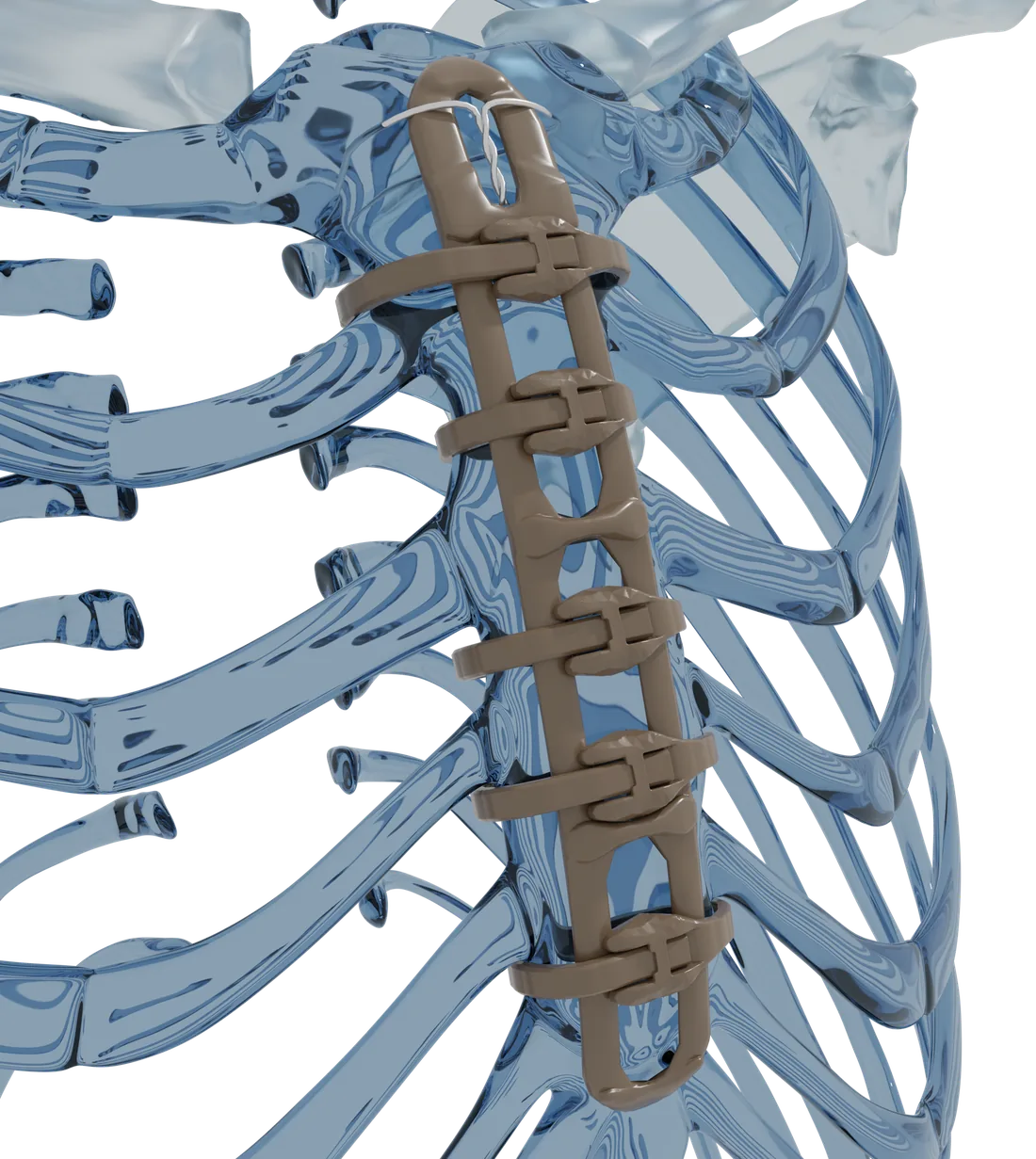
An anatomic PEEK buttress plate runs the length of the sternum. Circumferential bands encircle the bone and lock into the plate, compressing the halves together while the plate controls longitudinal motion.
Conforming, low-profile buttress plate fits patient-specific anatomy.
Circumferential compression plus longitudinal buttressing.1
Unibody construction shares load evenly between bone and device.1
Limited bone contact lets fluid flow under, through and around the implant.
Does not interfere with post-operative X-ray, CT or MRI.
All implants are made with VESTAKEEP® PEEK, safe as a permanent implant.
Bands are applied the same way every time, with no measuring or drilling.
Cut the bands for fast re-entry when emergent access is needed.
1 Internal data on file.
Surgical technique
The procedure is the same in every patient, so closure is consistent from case to case and surgeon to surgeon.


Indications
The VariTrax Sternal CircumFixation system is indicated for primary or secondary closure/repair of the sternum following sternotomy or fracture of the sternum to stabilize the sternum and promote fusion.
Clinical evidence
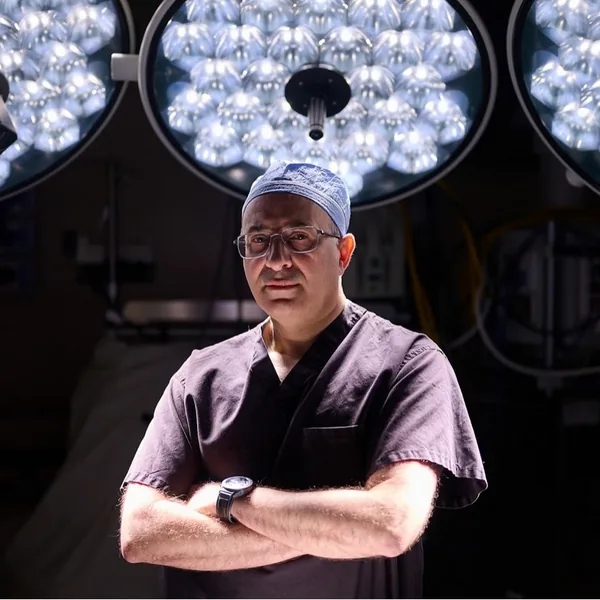
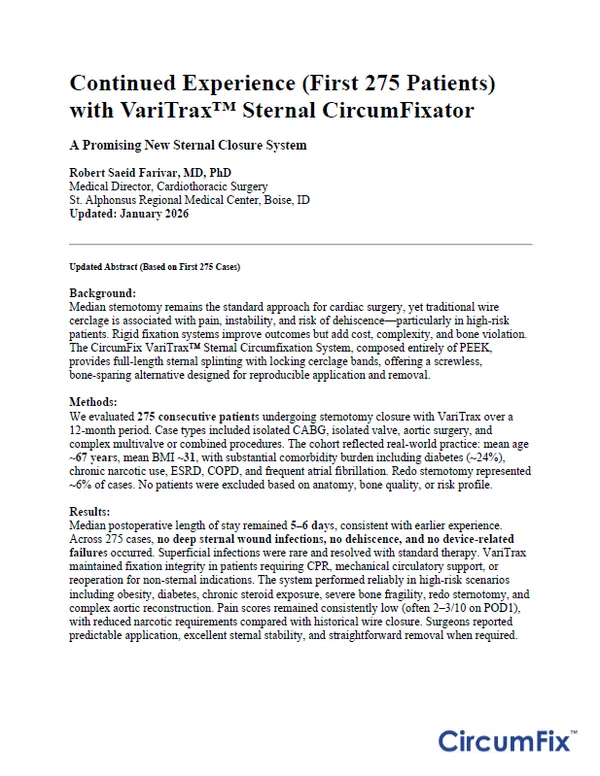
Farivar RS. Continued experience (first 275 patients) with VariTrax™ Sternal CircumFixator. Saint Alphonsus Regional Medical Center, January 2026. Single-center series.
Clinical conclusionVariTrax™ demonstrates consistent safety, durability, low pain and stable fixation across diverse cardiac procedures and high-risk patients. Surgeons report predictable application, excellent stability and easy removal.
The author receives no funding for the reporting of this series.
| n = 275 | Mean | Median | Range |
|---|---|---|---|
| Age (years) | 66 | 67 | 19–82 |
| BMI | 31.4 | 30.7 | 18.8–48.7 |
| Weight (kg) | 96 | 94 | 53–158 |
| Post-op LOS (days) | 6.1 | 5.0 | 1–30 |
| Male | 70% (193) | ||
| Reoperation | 6% (16) | ||
| Diabetic | 22% (61) | ||
| Current tobacco use | 11% (30) | ||
Biomechanics
A finite element analysis compared three sternal closure constructs under identical physiologic loading: stainless-steel wire cerclage, titanium plate fixation and the VariTrax™ buttress-and-band system.


Basic fixation with high displacement and localized bone stress.
Maximum immediate rigidity, but reduced bone loading and screw-related stress risers.
Balanced stability plus physiologic load sharing. Its modulus and mechanics align with Wolff's law.
How it works
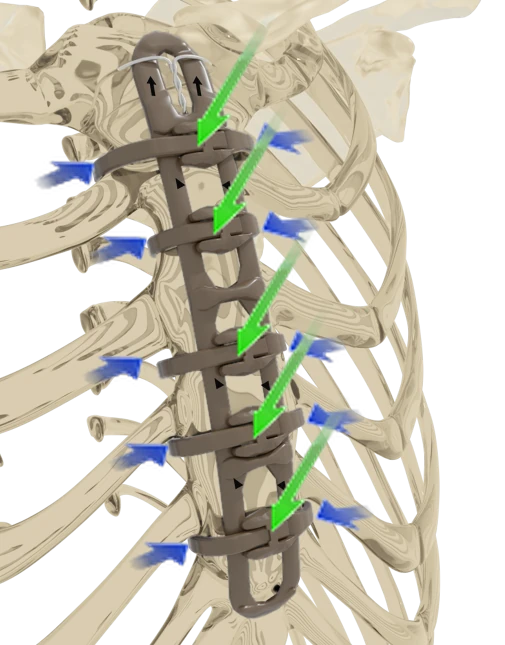
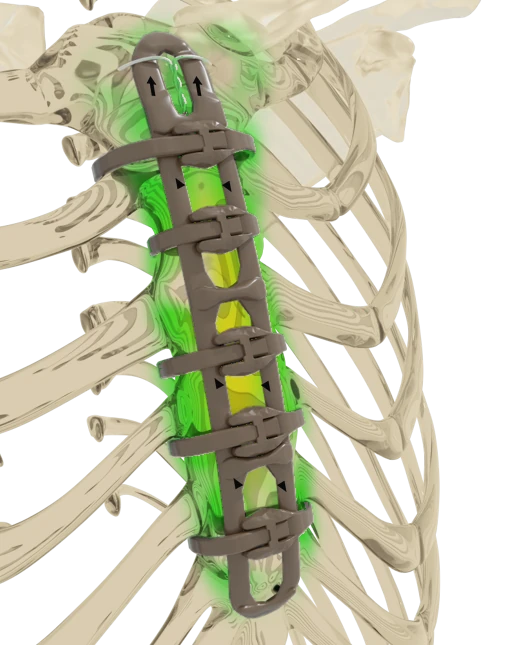
Tensioned bands compress the plate and segments, anatomically immobilizing the sternum.
Bands and plate support the bone without risking unintended damage.
The implant design and the modulus of PEEK combine to share load evenly with the bone.
The construct neutralizes and dissipates forces on the sternum, holding anatomic reduction for reliable healing.
Product & ordering
Everything for one closure arrives in one sterile kit. There are no trays to reprocess or restock, and no inventory shrinkage.

Licensed healthcare professionals should download, print and review the IFU, and keep it available for reference during any procedure. IFUs may be revised from time to time, so check this page for the current version before each procedure. For a printed copy at no charge, contact us.
| Part number | Description |
|---|---|
| CFSK-0130 | VariTrax™ Sternal CircumFixator™ Set, 130 mm |
| CFSK-0142 | VariTrax™ Sternal CircumFixator™ Set, 142 mm |
| CFSK-0154 | VariTrax™ Sternal CircumFixator™ Set, 154 mm |
| CFSK-0166 | VariTrax™ Sternal CircumFixator™ Set, 166 mm |
| CFSK-0178 | VariTrax™ Sternal CircumFixator™ Set, 178 mm |
| CFSK-0186 | VariTrax™ Sternal CircumFixator™ Set, 186 mm |
| CFTK-TEMP | VariTrax™ Template Kit |
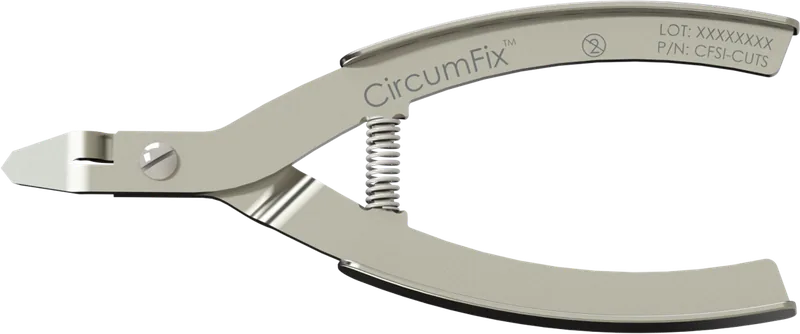
| CFIK-INST | VariTrax™ Instrument Kit |
| CFSB-001S | VSC™ Band with 70° Curved Blunt Needle, single |
| CFMB-001 | VSC™ Band with 70° Curved Blunt Needle, 5-pack |
| CFSB-002S | VSC™ Band with Short Blunt 58° Needle, single |
| CFMB-002 | VSC™ Band with Short Blunt 58° Needle, 5-pack |
All configurations supplied sterile.
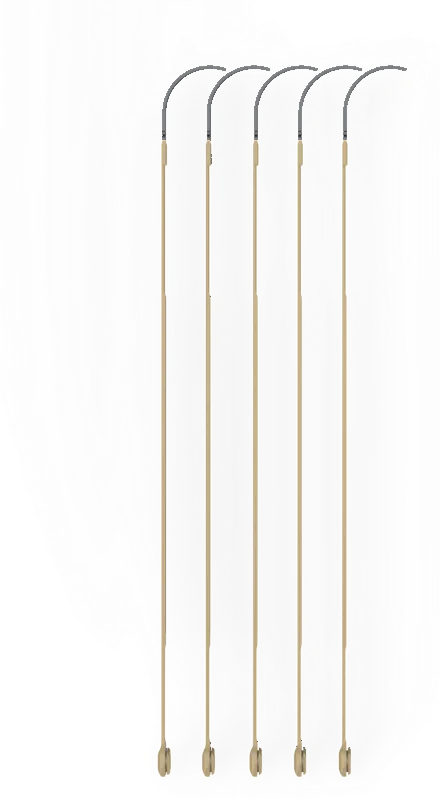
Bands (5×)

Buttress plate (1×)

Ribbon template (1×)
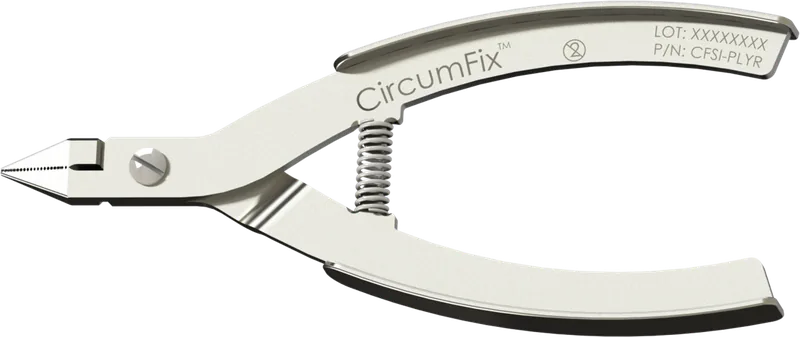
Company
CircumFix Solutions is a Collierville, Tennessee company built on decades of orthopedic and medical device experience, with a lean, outsourced model for engineering, manufacturing and regulatory work.

35+ years of sales and executive leadership in the orthopedic medical device industry, including Synthes and Smith & Nephew.

Cardiothoracic surgeon at Brooke Army Medical Center, JBSA–Fort Sam Houston, Texas.

25+ years of marketing, sales and operations leadership in orthopedics, including Integra LifeSciences, Smith & Nephew, Stryker and Synthes.

25+ years of corporate finance, investment and M&A experience. CPA, MBA.
Trademarks: CircumFix™ · CircumFixator™ · CircumFixation™ · VariTrax™ · VSC™
Contact
Talk with us about product evaluation, value analysis, ordering or a printed IFU.